ABC Fire Extinguishers: A Practical Buyer’s Guide for Homeowners in Pampanga & Central Luzon
ABC fire extinguishers are a practical starting point for many Pampanga homes because they can support common household fire risks when the unit is correctly placed, inspected, refilled, and easy for the household to reach.
An ABC fire extinguisher is often the first unit a homeowner asks about because it sounds flexible. One cylinder can cover common solid combustibles, flammable liquids, and energized electrical equipment, which makes it useful for many home and small-property risks. But flexible does not mean automatic. The right extinguisher still depends on where it will be placed, who may need to use it, how it will be maintained, and whether the home also has risks that need a different type.
For Pampanga and Central Luzon homeowners, the practical goal is simple: keep the right extinguishers visible, reachable, maintained, and matched to actual household hazards. SF Allied positions its Powermate Firex range around choosing by fire class, sizing the premises, refilling, inspection, maintenance, and training support. That is the right buying frame. Do not buy only because a cylinder is red and available. Buy because the location, rating, access, and servicing plan make sense.
What ABC Means In Plain Language
ABC extinguishers are commonly treated as multipurpose dry chemical units. The letters describe the types of fires the extinguisher is intended to address: ordinary combustibles such as wood, paper, cloth, and many plastics; flammable liquid risks; and energized electrical equipment. That is why many homes, small offices, sari-sari stores, and rental properties start with ABC units.
The important word is "intended." A household still needs judgment. A deep cooking-oil fire in a busy kitchen may call for different planning than a small trash-bin fire. A room with expensive electronics may raise cleanup concerns after dry chemical discharge. A storage area with fuel, paint, or tools may need a different size or location from a living room. Use ABC as a strong default for many household areas, then ask whether any location has a special risk.
Start With The Places A Fire Could Actually Start
Walk through the home before choosing quantity. Most homes have a few predictable risk areas:
- Kitchen and dirty kitchen
- Electrical panel or utility area
- Garage, tool area, or motorcycle parking
- Laundry area and small appliance corners
- Stock room, home office, or rental unit
- Outdoor cooking or service area
This walkthrough prevents two common mistakes. The first is placing one extinguisher in a hidden cabinet because it looks tidy. The second is buying several units but putting them where nobody can reach them quickly. An extinguisher near the risk, mounted visibly, and kept clear of clutter is more useful than one stored in a box.
For larger homes, townhouses, apartments for rent, or properties with a small business in front, treat each area separately. A garage-facing unit may not help someone in the upstairs hallway. A kitchen unit may not help a tenant in a detached studio. Layout matters.
Choose Size And Mounting For Real Users
Bigger is not always better for a home. A larger cylinder may have more capacity, but it may also be harder for older family members, helpers, tenants, or staff to lift and aim. A smaller unit may be easier to handle but may not be enough for the location. The correct size should match both the hazard and the likely user.
Ask the supplier to explain the size, rating, and recommended placement in plain terms. A good recommendation should consider wall space, mounting height, visibility, weather exposure, children, elderly users, and whether the unit may be bumped by vehicles or furniture. Outdoor or semi-outdoor locations also need protection from rain, corrosion, and direct abuse.
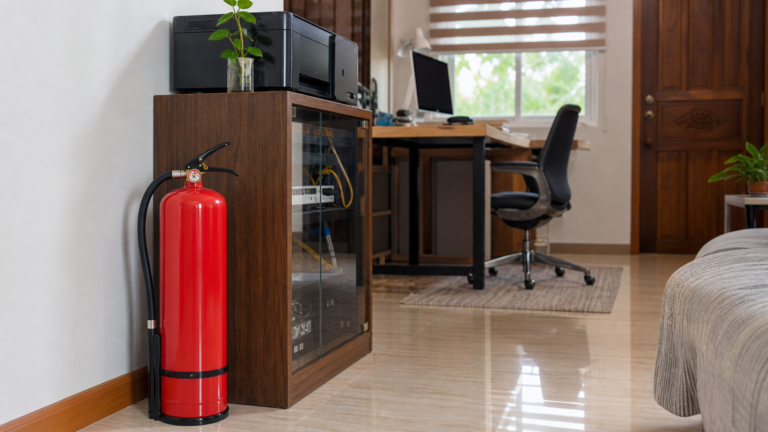
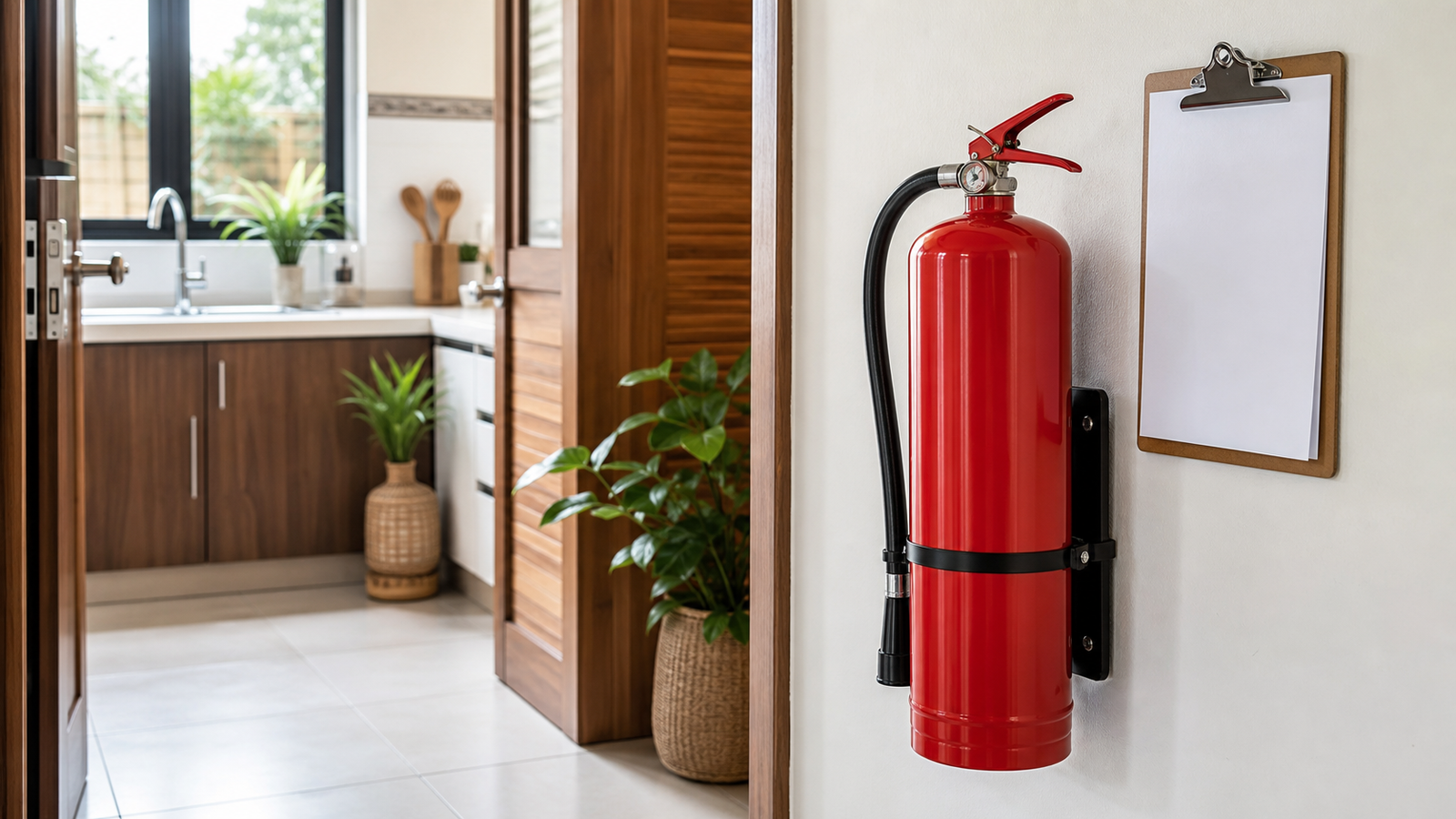
Mounting should feel boring and practical: visible bracket, stable wall, clear path, easy pull, and no obstruction. If a unit is behind sacks, cleaning supplies, or a locked door, it is not really available.
Do Not Treat The Kitchen As One Simple Area
Kitchens deserve extra attention because they combine cooking oil, LPG, electricity, appliances, towels, cabinets, and people rushing. An ABC extinguisher may be useful for several nearby risks, but placement matters. It should be reachable from a safe approach path, not mounted directly behind the stove where someone must move toward the fire to get it.
If the kitchen is commercial, semi-commercial, or used for food business, do not rely on a general home setup. Restaurant, canteen, hotel, or cloud-kitchen conditions can require different equipment and maintenance planning. For ordinary homes, still ask whether a kitchen-specific option should be considered alongside ABC units, especially where cooking is heavy.
Check The Label, Pressure, Pin, Seal, And Tag
Buying the extinguisher is only the first step. The unit should have a readable label, correct pressure indication, intact pin and seal, clean hose or nozzle, no heavy corrosion, and a current tag or service record. The family should know where it is, what it is for, and when to call for service.
A quick monthly visual check is a practical habit: is the unit still there, accessible, undamaged, and showing normal pressure? If it was used, tampered with, dropped, heavily corroded, or found with a pressure issue, it needs professional attention. Do not put a partly discharged unit back on the wall and assume it is fine.
SF Allied’s service pages emphasize refilling, recharging, pressure testing, tagging, delivery, and documentation support. That matters because an extinguisher that looks present but is empty, expired, damaged, or untagged can give false confidence.
Compare More Than The Purchase Price
When comparing ABC fire extinguishers, ask what is included:
- Brand and type of unit
- Size and rating recommendation
- Delivery or installation support
- Mounting bracket or cabinet options
- Inspection tag and service documentation
- Refilling or recharge process after use
- Maintenance schedule and pickup options
- Basic user orientation or training availability
The cheapest unit may not be the best value if servicing is inconvenient or unclear. For homeowners in San Fernando, Angeles, Clark, Guagua, Mexico, and nearby Central Luzon areas, local access to refilling and support is part of the buying decision. Fire safety equipment should be easy to maintain after the sale.
Keep Records Even At Home
Homeowners often think records are only for businesses. In practice, a simple record helps any property owner. Keep photos of the extinguisher locations, purchase details, service dates, tags, and supplier contact information. If the property is rented, used for business, or prepared for inspection, records become even more useful.
For families, the record also helps during turnover. If a helper, tenant, or relative changes, the next person can see where the extinguisher is and when it was last checked.
When To Ask SF Allied For Help
If you are not sure whether one ABC extinguisher is enough, where to mount it, or whether your kitchen, garage, or rental unit needs a different type, ask for a site-specific recommendation. SF Allied supplies Powermate Firex extinguishers, refilling, inspections, maintenance, and training support for Pampanga and Central Luzon properties.
The better purchase is not just a red cylinder. It is the right unit in the right place, with a clear service plan and people who know what to check. Start with the actual home, choose the extinguisher by risk and user, then keep it maintained so it is ready when it matters.
FAQs
Are ABC fire extinguishers good for homes?
Yes, ABC extinguishers are a practical starting point for many home areas because they cover several common fire classes. The exact size and placement should still match the room, risk, and likely user.
Where should I place an ABC extinguisher at home?
Place it near likely risk areas such as the kitchen approach, garage, utility area, or service area, but keep it visible, reachable, and away from direct flame paths.
Does an ABC extinguisher need refilling after use?
Yes. Even a brief discharge can reduce pressure or agent volume. Have the unit inspected, refilled, recharged, and tagged before returning it to service.
How often should homeowners check their extinguishers?
A simple monthly visual check is useful: confirm the unit is present, accessible, undamaged, sealed, and showing normal pressure. Schedule professional service when due or after any concern.
Can one ABC extinguisher cover every risk?
Not always. Cooking-heavy areas, commercial kitchens, sensitive equipment, or special materials may need a different extinguisher type or additional planning.