K-Class Extinguishers: A Practical Buyer’s Guide for Homeowners in Pampanga & Central Luzon
A K-class extinguisher sounds like an automatic upgrade for any kitchen, but most homeowners should pause before buying one. In ordinary homes, the first question is not “What is the strongest extinguisher?” It is “What kind of cooking risk do we actually have, and which extinguisher can someone use safely when stress is high?”
SF Allied already positions K-Firex wet chemical units for commercial kitchens, restaurants, and canteens. That is an important clue for homeowners in Pampanga and Central Luzon. K-class extinguishers are designed around cooking oils and fats, especially where hot oil, deep frying, and repeated food service create a different hazard from normal household cooking.
This guide helps you decide whether a K-class extinguisher belongs in your home kitchen, outdoor cooking area, small home business, or rental property, and how to compare it with ABC dry chemical units, fire blankets, placement, and servicing support.
Understand What K-Class Means
Class K refers to fires involving cooking media such as oils and fats. Wet chemical extinguishers are commonly used for that hazard because the agent helps cool the burning oil and form a layer over the surface. That makes them different from the general ABC dry chemical units most homeowners know.
The distinction matters because cooking-oil fires behave differently from burning paper, a small trash fire, or an electrical equipment incident. Throwing water on burning oil is dangerous. Moving a burning pan can also spread the hazard. A proper extinguisher plan gives the household a safer first-response option while still keeping evacuation and emergency calls as the priority when a fire grows.
Most Homes Still Need General Coverage First
For a typical household kitchen, an ABC dry chemical extinguisher is often the practical first unit because it covers ordinary combustibles, flammable liquids, and energized electrical equipment. SF Allied’s fire extinguisher page identifies ABC as the first extinguisher for many homes, offices, vehicles, and stockrooms.
That does not make K-class useless for homeowners. It simply means K-class is more specialized. If your kitchen mostly handles normal family meals with shallow frying and modest equipment, you may be better served by a properly placed ABC extinguisher, a fire blanket near the cooking area, and better cooking habits.
If your home has frequent deep frying, a heavy wok station, a small food business, a commissary-style setup, or a dirty kitchen that functions more like a commercial line, K-class becomes worth discussing.
Look At The Real Cooking Pattern
Before buying, describe the kitchen honestly. Do you fry large batches of food for family events or a home-based business? Is there a deep fryer, large oil pot, or repeated cooking for delivery orders? Does the outdoor or dirty kitchen operate for long hours? Are helpers, tenants, or relatives using the equipment when the owner is not nearby?
A kitchen that cooks one meal at a time has a different risk profile from a small food operation. A rental unit has a different user problem because the person cooking may not know where the extinguisher is or what type it is. A family compound may have several cooking areas, some of them outside the main house.
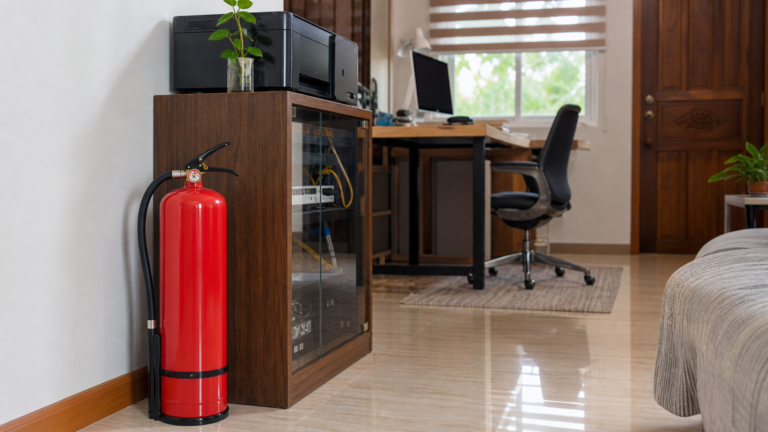
The right extinguisher plan follows those details. It is not enough to buy the right cylinder if it is mounted where no one sees it, too close to the hazard, or too heavy for the intended user.
Decide Where K-Class Fits Beside ABC And Fire Blankets
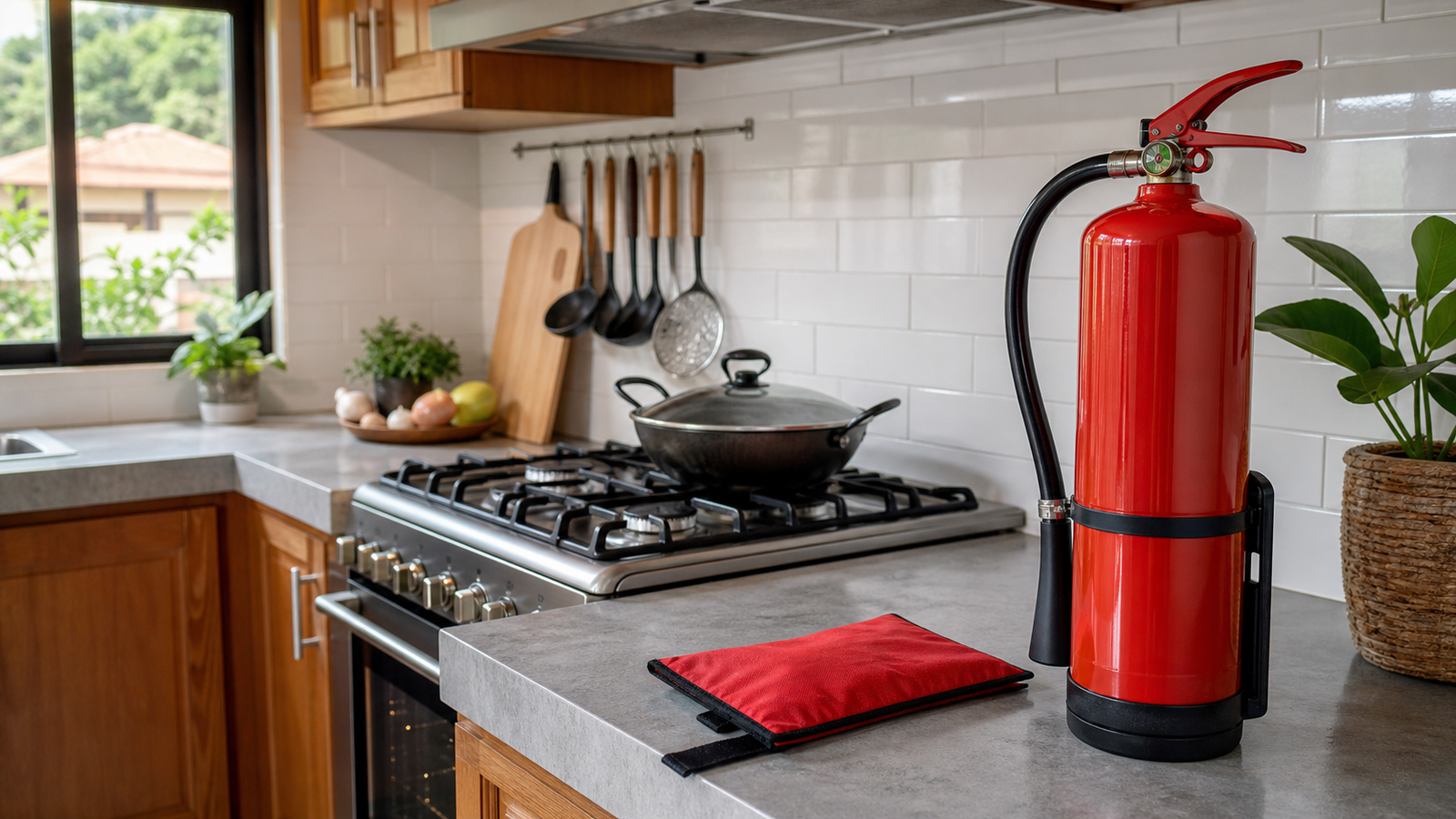
A good home kitchen plan may use more than one tool. ABC dry chemical can handle many general household hazards. A fire blanket can help with small pan or clothing incidents when used correctly. K-class wet chemical is more focused on cooking oils and fats.
The choice should be based on zones. A general ABC extinguisher may belong near the kitchen exit or hallway, not buried under the sink. A fire blanket may belong within quick reach but away from the stove flame. A K-class unit may be justified near a heavy frying or dirty-kitchen area, especially when cooking-oil volume and frequency are closer to commercial practice.
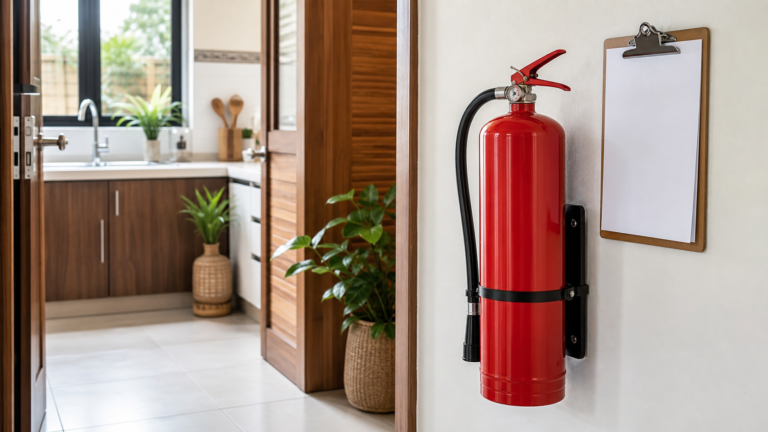
Do not place any extinguisher where someone must reach across the stove to get it. In a real event, access and escape direction matter as much as the label on the cylinder.
Check Capacity, Handling, And User Confidence
A larger extinguisher is not automatically better for a household. If the person most likely to use it cannot lift it, aim it, or carry it from the mounted position, the plan is weak. Ask about the practical size, mounting height, hose reach, and whether the user can understand the operating steps without jargon.
During handover, the household should learn the basic do’s and don’ts: when to attempt first response, when to leave, how to keep an exit behind them, and when not to fight the fire. A calm explanation is part of the value of buying from a fire extinguisher specialist rather than treating the purchase as a simple online item.
Plan Refilling And Inspection Before Discharge
An extinguisher is not ready forever just because it is new. Pressure condition, physical damage, service tags, mounting, access, corrosion, and user awareness all change over time. After any discharge, even a short one, the unit should be checked and serviced before it is treated as ready again.
SF Allied supplies extinguishers, refilling, inspection, maintenance, hydrotesting, and training support across Pampanga and Central Luzon. For homeowners, that local support matters because the best extinguisher choice is the one you can keep ready, not only the one that looked right at purchase.
Keep receipts, service tags, and notes in one home maintenance file. If the kitchen layout changes, review placement again.
Questions To Ask Before Buying
Use these questions before approving a K-class extinguisher quote:
- Is the cooking risk truly oil/fat focused, or is an ABC unit more appropriate?
- Is this a family kitchen, dirty kitchen, rental, or home-based food business?
- Where will the unit be mounted so it is reachable without moving toward the hazard?
- Who will use it, and can they handle the size?
- What other extinguishers or fire blankets are needed nearby?
- How will refilling, inspection, and maintenance be handled locally?
A good supplier should be able to answer without forcing a one-size-fits-all package.
When To Ask SF Allied For Help
If you are unsure whether a K-class extinguisher is necessary, do not guess based on the word “kitchen.” Ask SF Allied to compare your actual cooking setup with ABC, fire blanket, clean-agent, foam, and K-Firex options.
For many Pampanga and Central Luzon homes, the practical answer may be a balanced extinguisher plan rather than one specialized cylinder. For homes with heavy frying, dirty kitchens, rentals, or small food operations, K-class may deserve a closer look.
The goal is not to overbuy. The goal is to put the right first-response equipment in the right place, keep it serviceable, and make sure the people in the home know what to do when seconds feel confusing.
Need help choosing fire protection equipment for a Pampanga home, rental, or food business? Contact SF Allied to discuss extinguisher selection, placement, refilling, inspection, and training support.
Related SF Allied Resources
- Fire Extinguishers Pampanga
- Fire Safety Products Pampanga
- Fire Extinguisher Refilling Pampanga
- Fire Extinguisher Types Philippines
- Contact SF Allied
FAQs
Do all home kitchens need a K-class extinguisher?
No. Many ordinary home kitchens are better served first by a properly placed ABC dry chemical extinguisher and a practical fire blanket. K-class is more specialized for cooking oils and fats.
When should a homeowner consider K-class protection?
Consider it when the home has frequent deep frying, a dirty kitchen, a small food business, rental cooking areas, or cooking habits closer to commercial kitchen use.
Where should a kitchen extinguisher be placed?
Place it where it can be reached quickly without moving toward the stove or fire. It should be visible, mounted securely, and near an exit path.
Can SF Allied help choose the right extinguisher type?
Yes. SF Allied can compare ABC, clean-agent, foam, fire blanket, and K-Firex options based on the actual kitchen and maintenance needs.
What happens after an extinguisher is used?
Do not put it back as if ready. Have the unit inspected, refilled, or serviced before relying on it again.